Authored by Lisa Countryman-Quiroz, Chief Executive Officer, and Kelcie Wong, Chief Program Officer, JVS Bay Area
What we learned from expanding workforce training through California’s High Road Training Partnerships initiative.
At JVS, we’ve spent decades helping people build careers that lead to lasting economic mobility. As our programs proved successful, the question shifted from whether they worked to how we could bring them to more communities across California. Through California’s High Road Training Partnerships (HRTP) initiative, we learned that scaling impact requires more than great programs—it requires a funding model designed to help them grow.



From left: In recent years, JVS celebrated program graduations in San Diego, Sacramento, and the Central Valley thanks in part to HRTP funding.
California has one of the largest economies in the world, but that prosperity has never reached everyone. Too many people work full-time in jobs that don’t pay enough to live on, with no clear path to something better, while employers across the state’s most essential industries can’t find the skilled workers they need.
At JVS, we’ve never doubted whether our programs work—our graduates find thriving careers across healthcare, skilled trades, and other sectors. But we have struggled with how to expand their reach. Getting them to the parts of California where demand is high but the dollars and infrastructure to build them are scarce takes a specific kind of investment—and for a long time, that investment didn’t exist.
California’s High Road Training Partnerships (HRTP) initiative changed that.


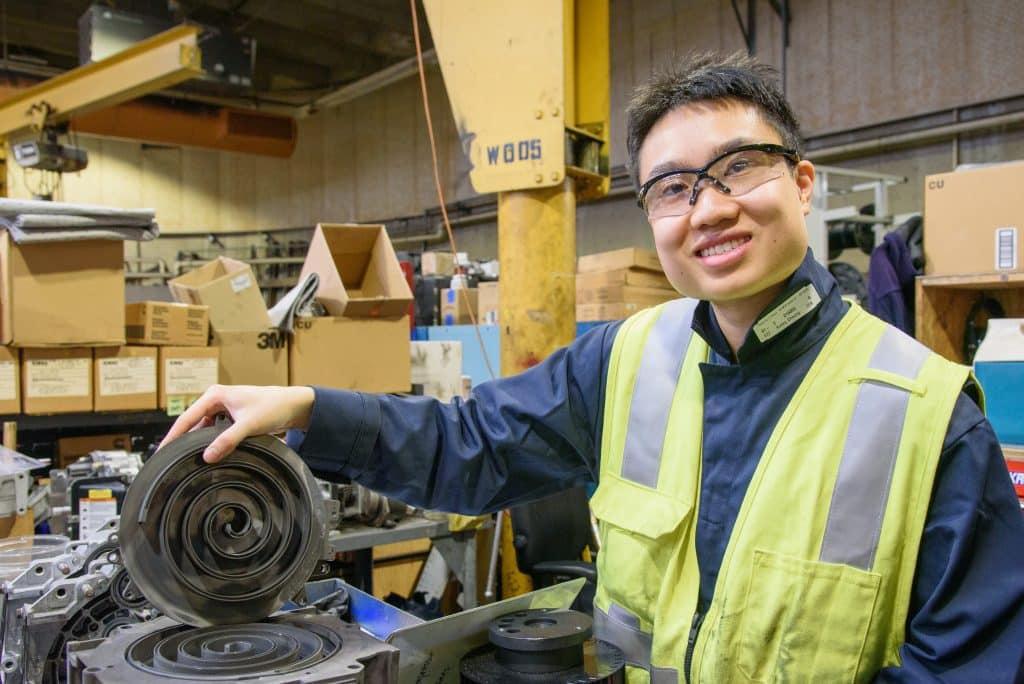
HRTP funding supported JVS programs in healthcare, tech, and the skilled trades.
What made the HRTP funding model different?
When the state created HRTP in 2017, income inequality here was among the worst in the nation, roughly three-quarters of California’s low-wage workers were people of color, and one in three workers earned less than $15 an hour. At the same time, employers across critical industries couldn’t find enough skilled workers, with a wave of retirements on the horizon.
California launched HRTP to solve both problems at once: Give employers the skilled workforce they needed and give workers a pathway to economic mobility, organized around the principles of job quality, equity, and climate resilience.
Most public workforce funding isn’t designed this way. Federal dollars usually do not cover the full cost of an enrolled participant, and there are tight rules on how they can be spent. HRTP was built differently:
- Eligibility required a coalition — A training provider, an employer, and a labor partner could apply for funding together. That way, the training actually fit the jobs that need filling and the people filling them. And because the partners were bound together, the result wasn’t a one-off transaction but a durable relationship that lasts long after a single grant ends.
- The funding was flexible and not tethered to one region — This allowed JVS and others to take models proven in one place and rebuild them where the need was greatest. Different levels of funding—planning, training and implementation, and expansion grants—allowed for both the early work of building something from scratch and for the complex work of putting it into practice.
- Funding covered the things most grants won’t — Paid internships, work-based learning, and nimble wraparound support. If a participant needed a pair of scrubs, or their car broke down on the way to training, HRTP dollars helped us cover those costs.
- And most importantly, it came at a scale rarely seen in public funding for this work — Since launching in 2017, the HRTP program has awarded at least $248 million—a level of commitment, paired with high flexibility, that simply doesn’t exist in most public workforce dollars.
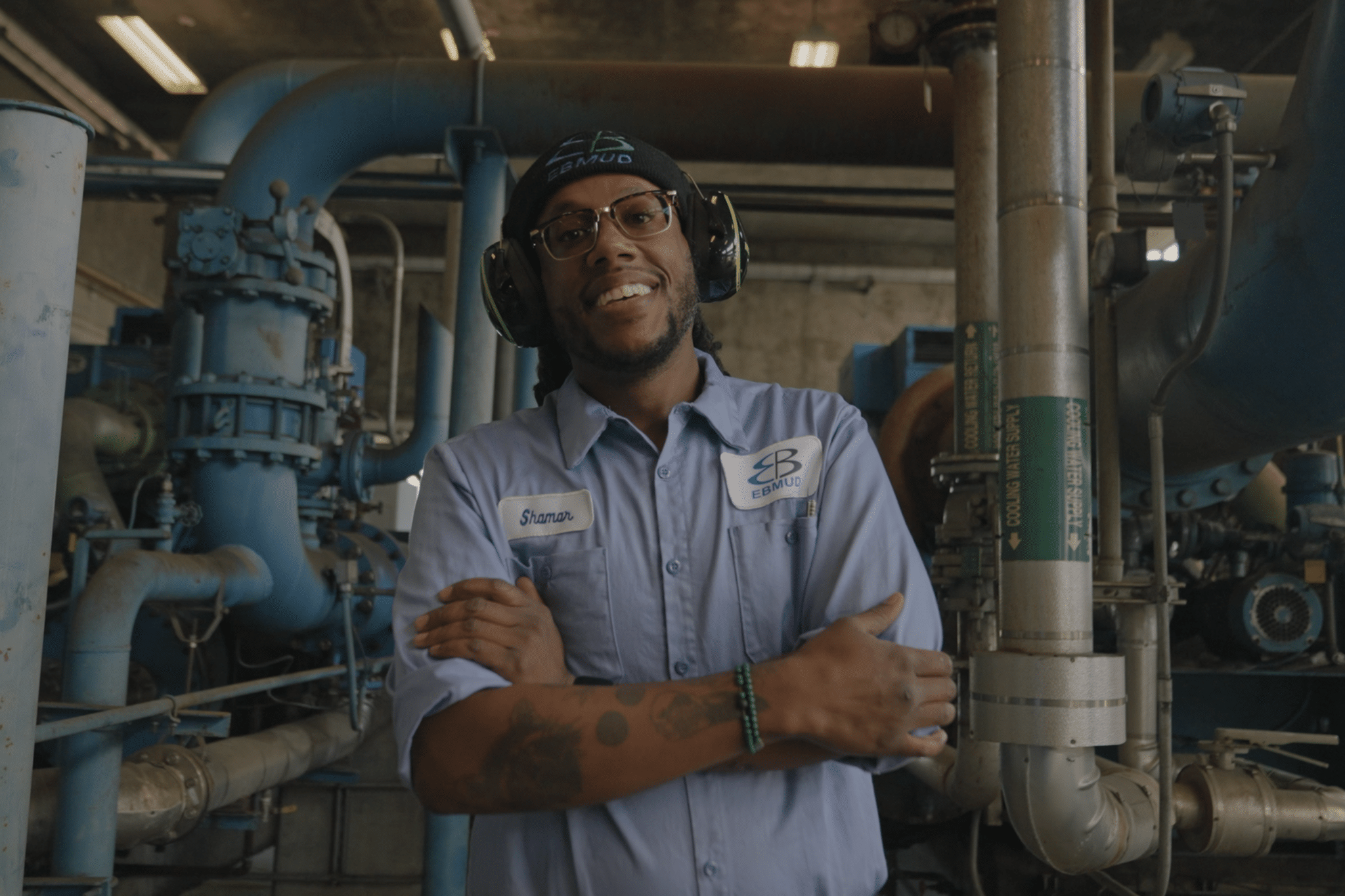
Program alum Shamar completed training in the water/wastewater sector with the support of JVS and BAYWORK and has since advanced in the industry.
How did HRTP help JVS replicate proven programs?
JVS’ first major HRTP project supported the expansion of BAYWORK, a 501(c)(3) nonprofit with which JVS has long partnered to build the region’s water and wastewater workforce, a skilled-trades pathway into a field with good wages, specialized training requirements, and high demand driven by an aging workforce. BAYWORK had already proven the model was worth scaling. Working with a consortium of 44 Bay Area water and wastewater agencies, we built a regional training infrastructure that pooled employer demand so that even small public utilities—the ones without the capacity to train workers on their own—could count on a skilled pipeline. Agencies that were once trying to solve systems-level problems on their own now had cross-industry support to fill talent gaps and get jobseekers into quality careers.
We also had a new validation resource. For the first time, state employment data let us track our graduates over time, offering independent confirmation of what we’d seen in our own programs. The data showed they were still increasing their earnings years after finishing. That outside validation sharpened our confidence in both our results and our approach, and made us eager to bring our programs to the parts of California that don’t have the same resources.
HRTP funding made it possible for JVS to set bold goals to expand our footprint across the state. We were awarded a planning grant to take the BAYWORK model and replicate it in the Inland Empire. That became IEWorks, which grew into its own multi-sector ecosystem of employers, educators, and labor partners and eventually spun off into a standalone 501(c)(3).
What this investment meant on the ground is best told through someone who lived it. Seeking a career change, Arthur enrolled in our water/wastewater training program, recognizing its potential for career growth and financial stability. He worked 16-hour days during the program, balancing his job at a gas station with his training, and his commitment paid off. He was hired full-time as an Assistant Water Systems Operator soon after completing his paid internship. “The thing I’m most excited about is just seeing how fast I can grow. There’s a lot of opportunity here and honestly, I didn’t know that the pay went so high,” Arthur shared.
Running multiple rounds of HRTP projects gave us the track record to go bigger still. While our first grants focused on the skilled trades sector, our more recent grants focused on healthcare, spanning in-demand pathways like medical assisting, nursing, dental assisting, sterile processing and more in regions from Sacramento to Los Angeles to San Diego.
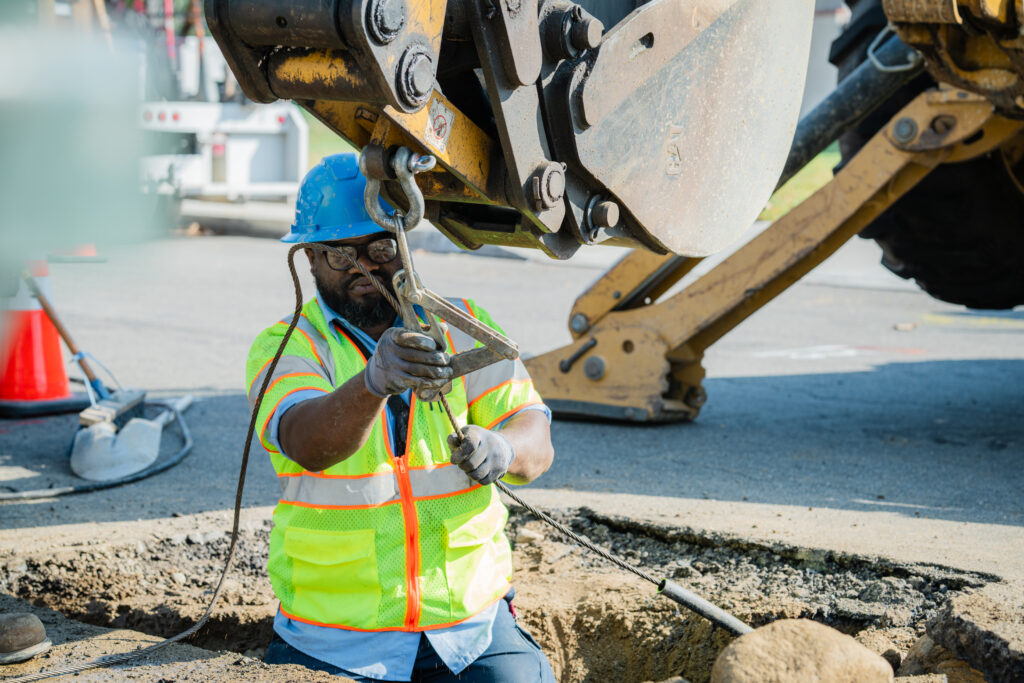
JVS and IEWorks alum Arthur landed a high-paying job in the water industry shortly after completing his program.
By the numbers
- In total, JVS has received about $8.6 million in HRTP funding.
- Of the 508 individuals who have come through our HRTP-supported programs, 88% have completed them, with many more still in the pipeline expected to complete.
- Data from the EDD shows that graduates in the Health, Trades, and Tech sectors show a 128% growth in earnings three years after completing a JVS program, compared to their earnings one year prior to starting a program.
What’s next for HRTP and state workforce funding?
HRTP was so successful because it recognized the critical importance of partnerships, flexibility, and meeting workers and employers where they are. Now, as the HRTP initiative sunsets, nonprofits like ours are left to figure out how to keep delivering the same level of impact without much-needed investment.
Government funding, including HRTP, once made up about 33% of our overall budget. But over the last year, funding has tightened at every level: Philanthropy is stretched thinner as more organizations compete for fewer dollars, the state is in a budget crunch, and federal workforce spending has barely increased in decades.
But the stakes here are bigger than any one organization’s budget. HRTP was built to address problems that haven’t gone anywhere—and in some cases have only sharpened. Income inequality in California remains near historic highs. Employers across essential industries still can’t find the skilled workers they need as a generation retires. And AI is now reshaping the labor market in real time, with entry-level and low-wage workers bearing the brunt of the disruption.
California has already proven it can rise to the occasion and meet these challenges head on—the HRTP model works, the outcomes are real, and the partnerships are still in place. Our hope is that the state can recognize workforce development not as a cost to be trimmed, but as one of the most reliable investments it can make in its workers and its economy. We’ve seen the return. We’re ready to keep delivering it.